
Museums, book streets, tea-house debates, and centuries of layered architecture define Baghdad's rich cultural identity.
Knowledge & Expression
Baghdad's cultural identity runs as deep as the Tigris itself. The Iraqi National Museum, one of the most important archaeological museums in the Middle East, houses artifacts spanning 7,000 years of Mesopotamian civilization — Sumerian statues, Assyrian reliefs, Babylonian tablets, and Islamic-era manuscripts. Though looted in 2003, it has undergone significant restoration and remains a testament to Iraq's unparalleled historical depth.
Al-Mutanabbi Street, named after the great 10th-century poet, is Baghdad's legendary book market and intellectual center. Every Friday, its sidewalks fill with stalls selling new and used books, rare manuscripts, maps, and prints. Writers, professors, students, and curious citizens gather here in a living tradition of literary exchange that has survived wars, sanctions, and bombings — and continues to rebuild itself each time.
Beyond the museum and the book street, Baghdad's cultural life pulses through its tea houses, art galleries, music venues, and university campuses. The Baghdad School of Music, the Iraqi National Symphony Orchestra, and a growing contemporary art scene all speak to a city that refuses to let its creative spirit be diminished.

Built Heritage
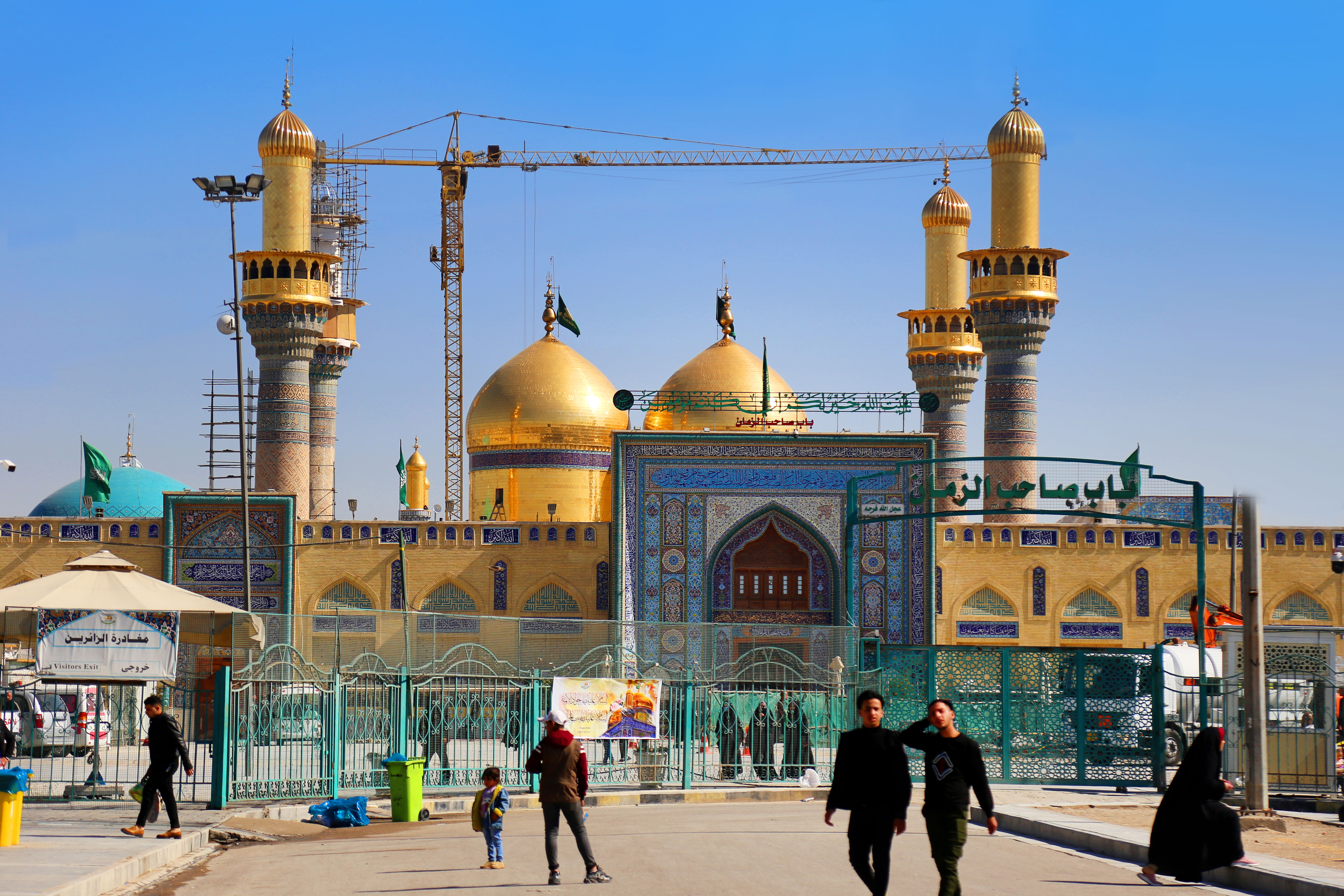
Baghdad's skyline tells the story of its many lives — from Abbasid palaces to Ottoman houses, from British-era institutions to modernist landmarks and contemporary developments.


Growth & Development
Baghdad today is a sprawling metropolis of more than eight million people. It has expanded far beyond the compact medieval city that once fit within the famous Round City walls. Modern Baghdad stretches along both banks of the Tigris, connected by a network of bridges, highways, and arterial roads that pulse with traffic from dawn until late at night.
The city's growth has been shaped by waves of modernization — the ambitious urban planning projects of the 1950s and 1960s, the oil-boom construction of the 1970s and 1980s, and the post-2003 rebuilding efforts that continue today. Neighborhoods like Mansour, Karrada, and Jadriyah reflect different eras of Baghdad's development, each with its own character, architecture, and social rhythm.
New residential developments, shopping malls, universities, and infrastructure projects are gradually reshaping the city's landscape. Despite the challenges of recent decades, Baghdad continues to grow, adapt, and reinvent itself — a city whose future is being written alongside its ancient past.